
To pick up the best primer to cover drywall imperfection is never a straightforward task. It takes a lot of time and energy to pick the right one. We get it. That’s why we take this massive task on ourselves. Here, we reviewed some best primers that can do a good job of covering drywall imperfections. Also, you will get to read a buying guide and some frequently asked questions. So, hold on tight; we’re going for a fun ride. Let’s dive in.
Table of Contents
Best Primer to Cover Drywall Imperfections
1.Rust-Oleum 2004 Zinsser Bulls Eye 1-2-3 Primer, 1 Quart, 946 ml, White – the best primer for new drywall in the bathroom

Highlighted features:
- It covers approximately 100 sq. Ft.
- Water-based formula.
- Doesn’t yellow over time.
- Breathable.
It’s water-based and smooth, which makes this primer so perfect for wall applications. You can try it for both exterior and interior ventures. Not to mention, it goes on smoothly on both interior and exterior projects. But, what’s the million-dollar feature? Well, it can resist peeling, blistering, and mildew growth. Thus, your wall stays neat as a pin. It’s also compatible with pH surfaces, for instance, concrete. This product just gets better and better, right? On top of that, it works on all sorts of surfaces such as metal, plaster, concrete, tile, and glass. Good for you. But, wait, there’s more. Here is no sanding to pile up your task. So, never mind. To make things better and more comfortable, you only need soap and water to clean if anything goes messy. Now, here’s the kicker – it has a soft sheen that compels to look your wall so lovely. Besides that, the coverage makes the whole deal much better.
- It sticks to all sorts of surfaces.
- No sanding required.
- Flexible hence so straightforward to work.
- Holds up exceptionally well.
- The fumes are so potent that it can make you feel sick. Thus, take necessary precautions such as use in a well-ventilated area or wear a respirator.
- You can’t use it as a filling primer.
2.Rust-Oleum Corporation 01501 Drywall Primer, 1-Gallon, White – the best primer for drywall repair

Highlighted features:
- Water-based
- Color – flat white.
- It covers more than 300 sq. feet.
- Low odor.
Rus-oleum made this primer exclusively to cover drywall imperfections. But here’s the thing – you can also use it for smooth walls. The drying is faster than your expectations. It will only take 1 hour. You can do the prime and paint on the same day. It looks like a time-saving primer, isn’t it? What’s more, it’s thicker than other regular water-based primers. Thus, the wall appears good after the paint is laid down. Yet, it might not cover up super messy imperfections.
- Seals new drywall instantly.
- A little is enough to go a long way.
- Easy to clean up – only water needed.
- Provides super coverage from small to moderate flaws.
- It’s a tad watery; thus, you might need to apply a few layers.
- Doesn’t cover substantial imperfections.
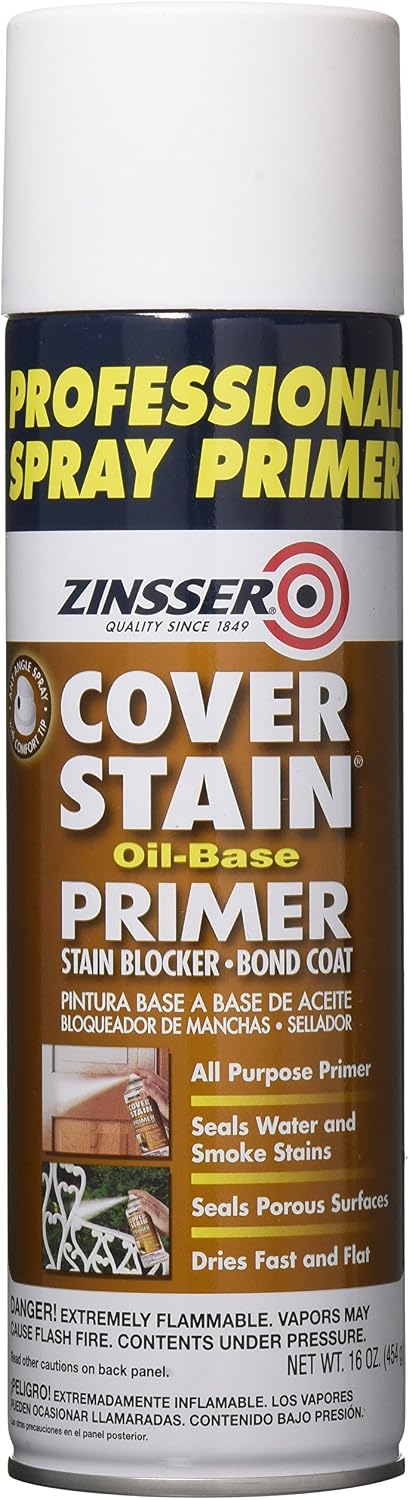
3. Rust-Oleum Corporation 3609 – the best primer for new textured drywall
Highlighted features
- The application temperature will be 40 to 90 degrees F.
- 16 oz, white.
- Oil-based primer
- It can be used as a wood sealer.
First of all, you can use this primer without sanding. Still, it sticks impressively compared to other regular primers. Nicotine, water, and smoke stains, you name it, it mingles with every sort of surface. Besides that, it blocks redwood and cedarwood on exterior surfaces. Still not impressed. Well, then, let me make my biggest revelation. It possesses vertical aerosol; thus, it hides challenging stains without any complication.
- Keeps out the moisture.
- Provides a thorough penetration.
- Make the wall look new.
- A must-have primer for exterior surfaces.
- You need to overspray on many occasions.
- Dreadful odor.
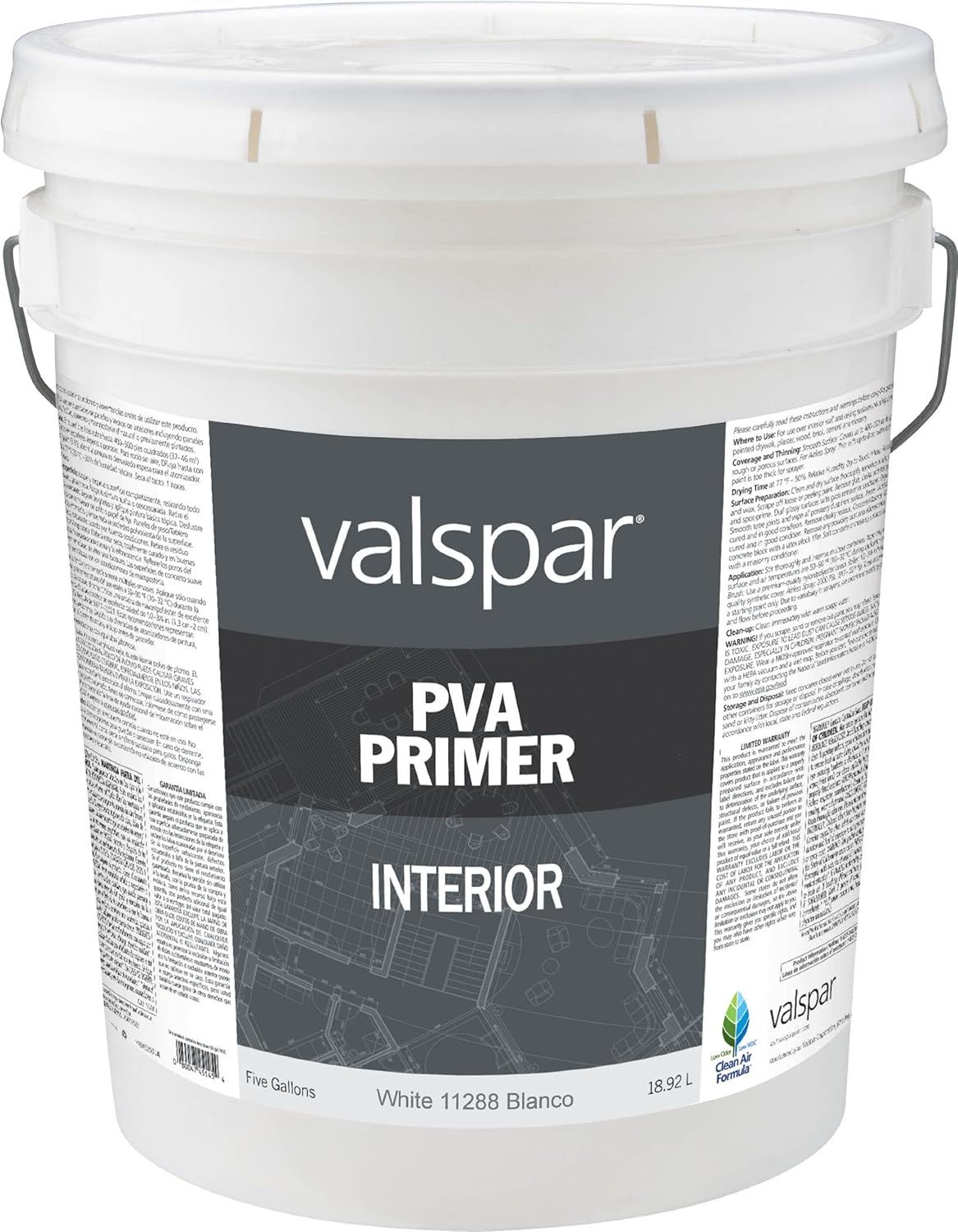
4.Valspar 11288 Interior PVA Wall Primer – the best primer for old drywall
Highlighted Features:
- Oil-based.
- Color – white
- Size – 5 gallons.
- Seals plaster and drywall.
I must have to admit; this product is relatively new on the market; also, the price could be a tad intimidating. But again, in terms of quality, it’s a gem. Further, it can seal any porous surface. Not only that, but this product also prepares the surface for the architectural topcoat, What’s more, it can be used on masonry, wood, plaster, and painted drywall. You can use it with a roller or brush. But if you’re not comfortable with these things, you can also spray. Sounds good?
- The leveling properties make the entire experience easier and more comfortable.
- It can be used with both oil=based or latex paints.
- Offers a uniform surface.
- Provides consistent flow; thus, you can use it without any hassle.
- An ideal choice for the painters
- The price really could be a bummer for you if you have a tight budget.
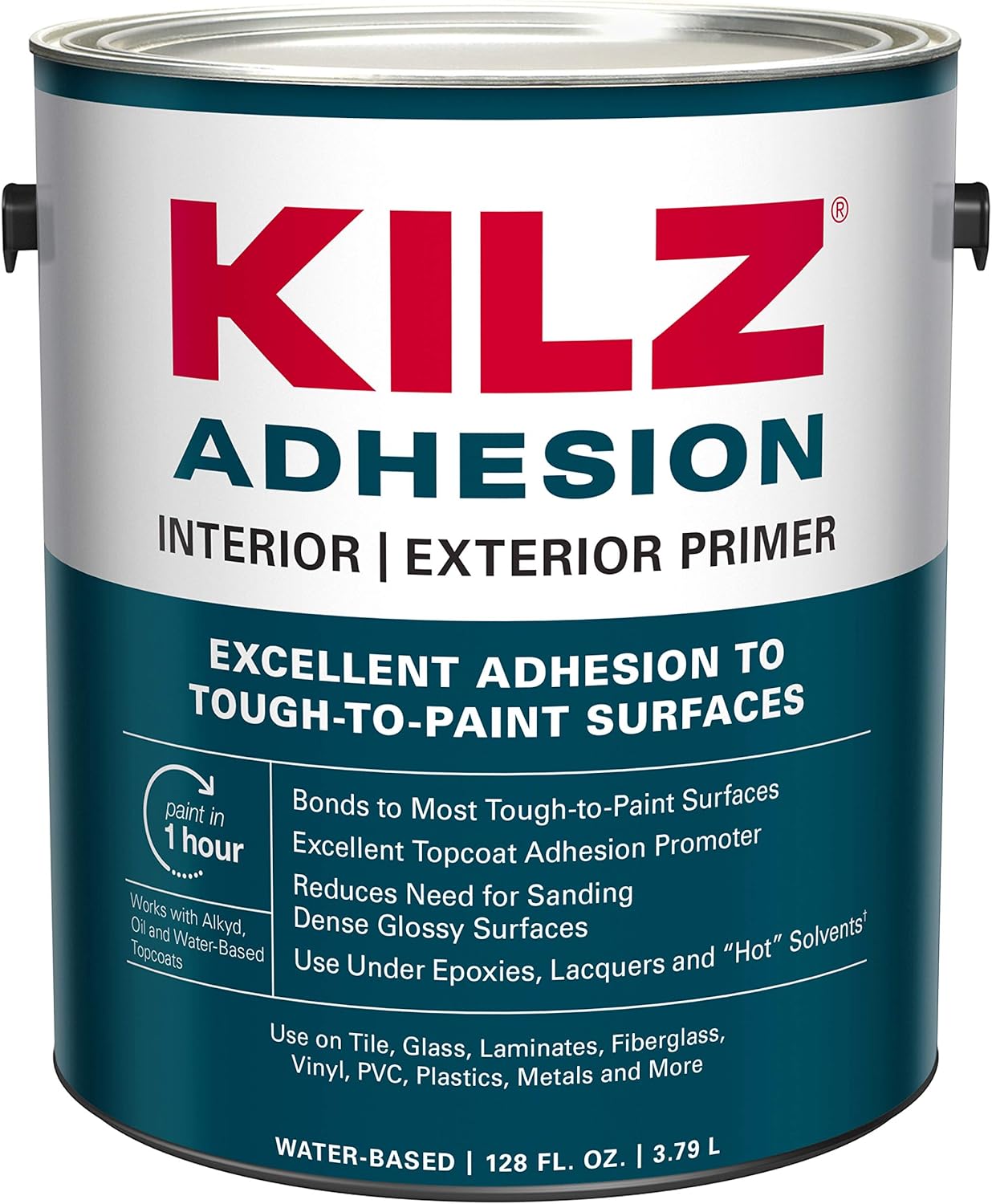
5.KILZ L211101 Adhesion High-Bonding Interior Latex Primer/Sealer, White – best drywall primer-sealer
Highlighted Features:
- Water-based.
- It can be topcoat-ed with latex or oil-based paint.
- Viscosity – 93-100 KU.
- Size – 1 gallon
Alright, kilz primers are always divine to work with. That’s something we can never deny. But here‘s the deal – is it equally helpful to cover drywall imperfections. Let’s find out then. You can use it on paint surfaces like tiles, glass, vinyl, Formica, glossy finishes, chalky paint, glazed brick, PVC, Kynar, fiberglass, and metals. As if that’s not enough, it can also be used on drywall. But, before that, clean glossy surface. Then, you can do a test to make sure – everything goes alright.
- Covers the imperfections perfectly.
- It dries relatively quickly, might take around 30 minutes.
- You can scrub aggressively.
- Provides an excellent adhesion; hence it goes on effortlessly.
- It smells. Though I will say, it’s perfectly bearable.
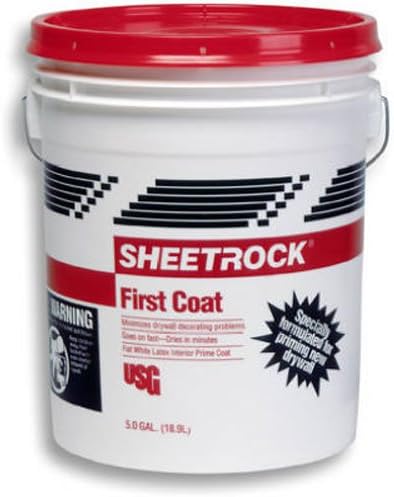
6. Sheetrock 544822 First Coat Primer Sealer – the best primer for fresh drywall
Highlighted features:
- Size – 5 gallons.
- Works as a primer and sealer.
- Color – off-white.
- Made in the United States.
This product from sheetrock is a pure gem. After using this, you hardly feel to use anything else. Want to test? As it’s a primer-sealer, hence you got the best of both worlds. It’s like killing two birds with one stone. Good for you, mate. First of all, it seals the pores. After that, it prepares the drywall uniformly so that it accepts the paint. Still, I found complaints that said – it doesn’t work well. And, I asked them – what sort of paint did they use. You see where I am going. Yes, that’s correct. If you purchase cheap paint, you might not get the desired results. So, buy a quality paint to match the quality of this primer-sealer. There you go.
- Versatile; thus, you can use it as a sealer and primer.
- Ensures the paint lay on evenly.
- Effortless to use.
- Low odor.
- Pricey.
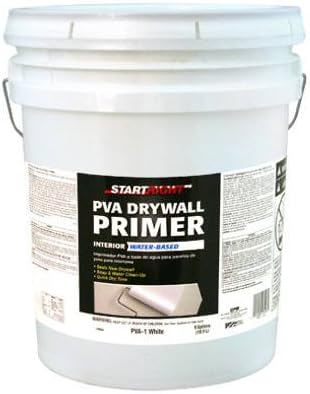
7. True Value PVA1-5G Start Right Drywall Primer – the best primer for drywall mud
Highlighted features:
- Water-based primer.
- Size – 5 gallons.
- Flexible.
- The dimension is 11 x 13.5 x 11 inches
This drywall primer is so effortless to use. It has a lower odor than other regular drywall primers, making it a perfect interior project choice. Further, clean-up is super fun to do. Guess what you need for that? Some water and soap are just fine for that. Yes, it’s really that simple. Speaking of drying time, it’s faster than other regular primers. Isn’t it a treat for a busy person like you?
- Provides an elegant finish.
- VOC is less than 99-100 grams if we determine it per liter.
- Seals the new drywall.
- It dries quickly.
- Not compatible with outdoor projects.
Wrapping up
These are our top seven primers to cover drywall imperfections. So, understand your requirement and pick up wisely. Anyway, if I have to suggest, I will ask you to go for Rust-oleum primers. They’re versatile, sticks to the surface, don’t yellow over time, breathable, and compatible with interior and exterior ventures. What you need more? Anyway, the final call is yours. So, I will leave this decision to you. For now, that would be all.
Primer to Cover Drywall ImperfectionsBuying guide
Why Is Drywall Primer Necessary?
The newly finished drywall could be really challenging to paint. It’s because – the surface sort of has three textures. And each one of them has a different level of absorption. Therefore, a primer is a must before painting your drywall.
Advantages of applying drywall primer:
Without a primer, the drywall might look naked. In fact, Brian, a painter, believes that even a textured wall must have a sealer or primer. Otherwise, the wall will crumble over time. Sounds absolutely terrifying, right? Just to save some bucks, it doesn’t look like a good decision. Besides that, primers ensure that your wall doesn’t get spoiled if it meets moisture, stains, and other occasional hazards. Not to mention, it makes the paint last for a longer time. Needless to say, a wall with a proper primer looks so eye-soothing. The reason is – due to the primer, the paint adheres evenly. Hence, your wall never has to go through the mess that a primer -less wall has to.
Things to consider before buying a drywall primer
Thickness:
Using a thick primer will let you fill in holes, bubbles, and gaps. These things typically occur during the texturing process. Though, the thinner primer usually easy to work with.
Quantity:
When you purchase some online, you also have to pay for shipping costs. Thus, you must decide how much you need before. Otherwise, you might get charged extra. So, be smart. Anyway, a quick fact – one gallon, normally, cover 200ft². But it also depends on the fact of how much recoating you did throughout the process.
Applying Process:
Usually, people use a brush or roller to apply the primer. On a personal note, I feel more comfortable with a roller. So, pick up the one that makes you feel comfy. Nowadays, the spray is quite popular. I guess it could be a good alternative for this era. Don’t you agree?
Drying time:
There’s nothing complicated here. You must check on the manufacturer’s instructions and what they say about the drying time. Follow that exactly. However, a quick suggestion will not hurt anyone. If you have time, keep the primer for half a day so that it can adequately be dried. At the same time, paint the surface within two-three days. Otherwise, the properties can be gone. So, here’s the thing – you can paint neither too early nor too late. It has to be appropriately balanced, like the law of nature.